
Safe calls in the Waynesville area
Waynesville sits on Roubidoux Creek just above the Gasconade River, and it is older than most of the Ozark towns around it. The post office has run since 1834, the town was platted in 1839 and named for the Revolutionary War general Anthony Wayne, and it became the Pulaski County seat in the early 1840s, after a first courthouse of hewn logs. Roubidoux Spring, one of the larger springs in Missouri, rises inside the town, and Cherokee families stopped beside it during their forced removal west in the late 1830s; the Cherokee Nation marks it as a stop today. In the mid-1850s William Walton McDonald built a double log cabin with an open dogtrot on the square, half home and half stop for a stage line. In June 1862 Union troops of the 13th Missouri State Militia under Col. Albert Sigel occupied Waynesville, built a small fort on the hill south of town, and took McDonald's building for a post hospital. Its surviving ledgers record nearly nine hundred admissions in seventeen months, mostly for fevers and dysentery rather than gunshot wounds. The building then served as a hotel for about a century under names like the Waynesville House and the Black Hotel, boarded soldiers' families during the Second World War, was condemned as a hazard by 1970, and was saved by local volunteers; the Old Stagecoach Stop is now a house museum on the National Register. The courthouse on the square burned on June 13, 1903, and the fourth courthouse, with bricks fired on a nearby farm, was finished the next spring and used until 1990. It is now the 1903 Courthouse Museum. Then everything changed. On December 3, 1940, the Army broke ground south of town for what became Fort Leonard Wood, and in about six months crews put up nearly sixteen hundred buildings. Waynesville grew from about four hundred people to roughly thirty-five hundred almost overnight; workers rented rooms, slept in barns and pitched tents in fields. The villages of Bloodland, Cookville, Palace, Tribune and Wharton disappeared inside the new post, and their families had to move. Engineer training started in March 1941, a prisoner-of-war camp held German and Italian soldiers from 1943, and after a short closing in 1946 the post reopened in 1950. Today it is home to the Army's engineer, military police and chemical schools, and St. Robert, which grew from a spot called Gospel Ridge and incorporated in 1951, grew up beside the post. Waynesville shares a regional airport with St. Robert, and its schools, shops and rentals serve soldiers, civilians and families who rotate in and out every few years. We open, repair and service safes in Waynesville homes, shops and offices, and we cover the rest of Pulaski County as well.
Papers from the villages the fort replaced: land sales, relocation letters and old family photos
Families who were moved off the land in 1940 and 1941 often kept what little paper came with it: the government's offer, the sale or condemnation papers, the abstract for a farm that no longer exists, a letter about moving graves or visiting a cemetery, and photographs of a store, church or school that is now inside a training area. These papers matter to descendants and to local historians, and they can't be replaced. Keep them flat in acid-free folders inside a fire-resistant safe or file, not folded in an envelope in a drawer, and keep photos in archival sleeves away from rubber bands and tape. Scan everything and keep the scans somewhere else, such as with a relative or on a drive outside the house. Write down whose land each paper covers and how your family is connected, and keep that list with the scans. If the papers are in a parent's safe and nobody has the combination, have it opened by the executor or someone with authority over the estate rather than forcing it.
Surgical kits, apothecary bottles and other medical antiques
A town whose oldest building was a Civil War hospital draws collectors of medical antiques: surgeons' and amputation kits, bleeding tools, old pill and tincture bottles, doctors' bags and pharmacy cabinets. Some of these need more care than a typical collectible. Old bottles can still hold residue of opium, mercury, arsenic or other poisons, so don't open them or taste anything, keep them sealed and labeled, and keep them away from children and pets. Blades and saws stay sharp for a long time, so store kits closed and locked. A safe works for small, valuable pieces, but fire safes hold moisture, which rusts steel and loosens old labels, so add a renewable desiccant and check it often. Keep a list of each piece with photos and where it came from, and keep that list outside the safe. If an old pharmacy cabinet or doctor's bag is locked and the key is lost, have the lock picked or a key made rather than prying it open.
Safe services in Waynesville
- Safe lockouts and openings (forgotten combinations, dead keypads, failed electronic locks, lost keys)
- Combination changes and lock replacement (dial, electronic and key locks)
- Estate and inherited safes, with proper paperwork
- Safe installation: positioning and anchoring where the safe and floor allow it
Safes and master key systems only outside the Springfield area. Car, home and business lockouts, car keys, single-lock rekeys and lock installation are offered only in Springfield, nearby towns, and Branson.
Master key systems in Waynesville
Waynesville's schools, the courthouse and city offices, clinics, churches, off-post apartments and the shops that serve Fort Leonard Wood families see keys change hands with every move. A master key system lets each person carry one key for their own doors while managers keep a master, and a lost key means rekeying only what it opened.
Besides safes, master key systems are the one service we take to Waynesville. A master key system, also called master rekeying, means we plan who should open which doors, then rekey your locks so each person's key opens only what they need and a master key opens everything. When someone leaves or a key goes missing, the locks that key opened can be rekeyed without changing everyone else's keys. See master key systems and master rekeying for how it works.
Scheduling a safe job in Waynesville
When you call, tell us the safe brand, the lock type (dial, keypad or key), roughly how big it is, what happened, and where it is. We'll quote the job and set a time with you. Because regional safe jobs are planned around our other work, please call ahead rather than expecting same-day service.
We open safes only for owners or people with legal authority. Have your ID and proof of ownership, or estate paperwork, ready.
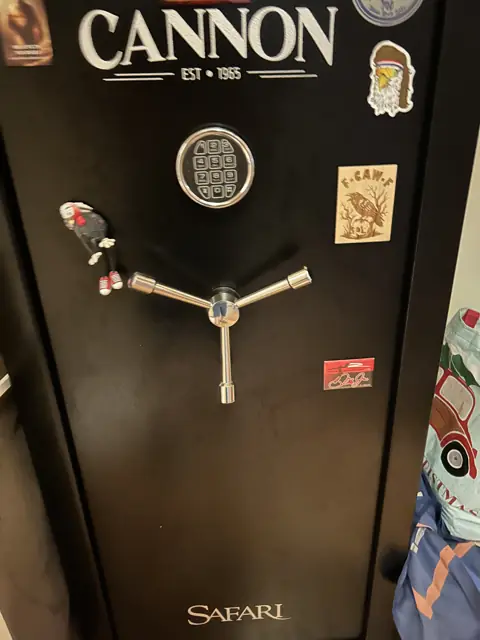
For more on the work itself, including lockouts, combination changes and installation, see our safe locksmith service page. To see what a safe opening looks like, watch us open a locked Cannon gun safe.
Safes we've worked on
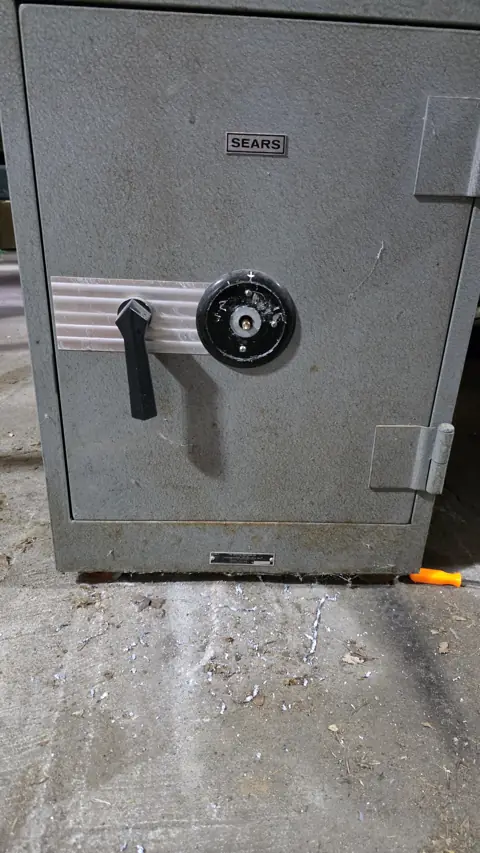
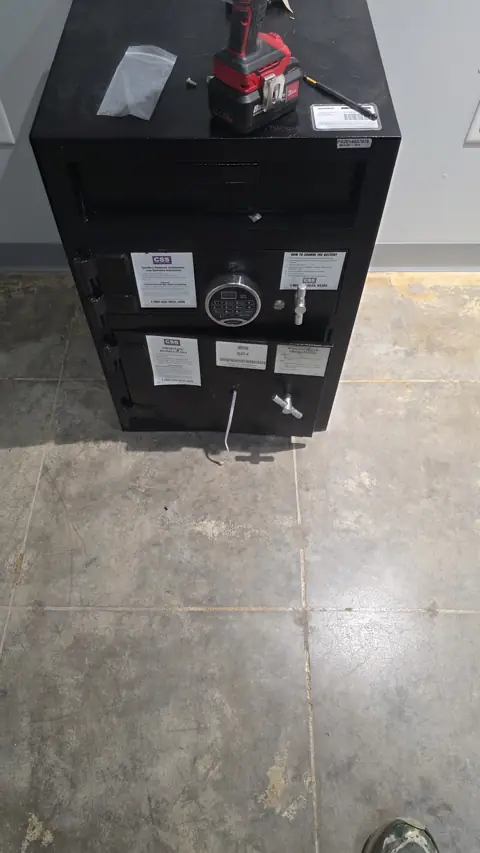
A few real safe jobs from our recent work.
Nearby safe service areas
We also take safe jobs in Vienna, MO, Lebanon, MO, Rolla, MO. See the full list of safe service cities.
Waynesville safe FAQs
My grandmother's family was moved off their farm when Fort Leonard Wood was built, and her papers are in a small safe we can't open. Can you help?
Usually, yes. Small fire safes can often be opened by picking the lock, decoding the key or other methods that don't put fragile paper at risk, and we can set a new combination or make a new key. Call (417) 590-3870 with the safe's brand and a photo of the lock, and have the owner, executor or someone with authority over the estate there with ID and that paperwork. We quote first and schedule once you approve.
I collect medical antiques in Waynesville, and an old apothecary cabinet I bought has a locked drawer with no key. Can you open it without damaging it?
Most likely. Old cabinet locks are usually simple enough to pick or to fit with a newly made key, which keeps the wood and the hardware intact. Call (417) 590-3870 with a photo of the lock and keyhole and your proof of purchase. If there are old bottles inside, leave them sealed. We quote first and schedule once you approve.
Do you set up master key systems for businesses in Waynesville?
Yes. Master key systems, also called master rekeying, are the one service besides safe work that we take to Waynesville. Call (417) 590-3870 with the type of building, roughly how many doors, and who needs access to what. We'll quote it and schedule a time with you.
Do you do other locksmith work in Waynesville?
No. In Waynesville we only do safe work and master key systems. Our car and home lockouts, car keys and other everyday services are limited to Springfield, MO, nearby towns, and Branson.
How much does safe work cost in Waynesville?
It depends on the safe, the lock and the job. Call (417) 590-3870 with the details and we'll quote it before we schedule.