
Safe calls in the Houston area
Houston is the seat of Texas County, the largest county in Missouri by area. The county was created in 1843 as Ashley County, named for William H. Ashley, Missouri's first lieutenant governor, and when it was finally organized on February 14, 1845 it was renamed for the Republic of Texas. In 1846 a seat of justice was laid out near the middle of the county on Brushy Creek and named Houston, for Sam Houston, the first president of the Texas Republic. Settlers from Virginia, Kentucky, Tennessee and the Carolinas had already set up sawmills along the Big Piney and rafted timber downstream toward St. Louis. During the Civil War the Union Army used the courthouse as a headquarters, because Houston sat between the federal posts at Springfield and Rolla. Confederate soldiers later burned the town, but before the courthouse went up in flames the county's record books were loaded up and hauled to a cave on Arthurs Creek, where they stayed until the war was over and then came back safely. The courthouse was rebuilt, damaged by fire in 1881, rebuilt again in brick, and destroyed by fire in December 1930. The present courthouse, the county's sixth, was finished in 1932 on the old foundation; it was remodeled in 1977 and 2007, and a separate justice center was completed in 2008. Much of the north and northwest part of the county lies in the Mark Twain National Forest, and the Houston Ranger Station, five frame and limestone buildings put up by the Civilian Conservation Corps in 1936 and 1937, is on the National Register along with Houston High School. Emmett Kelly, the circus clown known as "Weary Willie," was born in Kansas but grew up on a farm near Houston, where he took a correspondence course in cartooning and worked up "chalk talks" before leaving for Kansas City in 1917. The town held an Emmett Kelly Clown Festival every May from 1988 to 2008 and now holds an Emmett Kelly Day each spring. After the 2010 census, the Census Bureau placed the population center of the whole country in Texas County, near the village of Plato. We open, repair and service safes in Houston homes, farms and businesses, and we cover central and northern Texas County as well.
Records worth hiding in a cave: sorting the papers you could never replace from the ones you can
Most of what people pack into a home safe can be replaced with a phone call and a little patience: bank statements, old bills, insurance cards and owner's manuals. What can't be replaced is shorter and worth more thought. Original wills and trust papers, deeds and land surveys that were never recorded, a family Bible with births and deaths written in by hand, letters, photographs with no negatives, military discharge papers, and handwritten notes about where property lines and wells really are. Sort everything into those two piles before you buy or fill a safe. The irreplaceable pile goes in a fire-rated safe at home, with scans or copies kept by a relative or in a safe-deposit box, so one fire does not take both. The replaceable pile can live in a file cabinet. You will also find that a smaller fire safe holds everything that truly matters, which leaves room in the gun safe for guns.
Reunion committees: the class fund, the mailing list and the scrapbook that gets handed down
Class reunions, family reunions and old settlers' gatherings in small towns run on a few volunteers and a box of papers that passes from one chairperson to the next. That box usually holds a checkbook or cash for the hall and the meal, the mailing list with addresses and phone numbers, the sign-in books from past years and a scrapbook or photo album that nobody else has a copy of. Keep the money in a locked cash box or a small safe, with two people counting it after the event and writing the total down. Keep the address list off the open shelf, since it is personal information for every member. Scan the scrapbook and the old sign-in books before they change hands again, and put the originals in a fire-rated safe. When the chair changes, change the combination or hand over the key in front of a second committee member.
Safe services in Houston
- Safe lockouts and openings (forgotten combinations, dead keypads, failed electronic locks, lost keys)
- Combination changes and lock replacement (dial, electronic and key locks)
- Estate and inherited safes, with proper paperwork
- Safe installation: positioning and anchoring where the safe and floor allow it
Safes and master key systems only outside the Springfield area. Car, home and business lockouts, car keys, single-lock rekeys and lock installation are offered only in Springfield, nearby towns, and Branson.
Master key systems in Houston
Houston's courthouse, county offices, schools, churches, the Forest Service office and the shops around the square hand out keys to many people. A master key system lets each person carry one key for their own doors while managers keep a master, and a lost key means rekeying only what it opened.
Besides safes, master key systems are the one service we take to Houston. A master key system, also called master rekeying, means we plan who should open which doors, then rekey your locks so each person's key opens only what they need and a master key opens everything. When someone leaves or a key goes missing, the locks that key opened can be rekeyed without changing everyone else's keys. See master key systems and master rekeying for how it works.
Scheduling a safe job in Houston
When you call, tell us the safe brand, the lock type (dial, keypad or key), roughly how big it is, what happened, and where it is. We'll quote the job and set a time with you. Because regional safe jobs are planned around our other work, please call ahead rather than expecting same-day service.
We open safes only for owners or people with legal authority. Have your ID and proof of ownership, or estate paperwork, ready.
For more on the work itself, including lockouts, combination changes and installation, see our safe locksmith service page. To see what a safe opening looks like, watch us open a locked Cannon gun safe.
Safes we've worked on
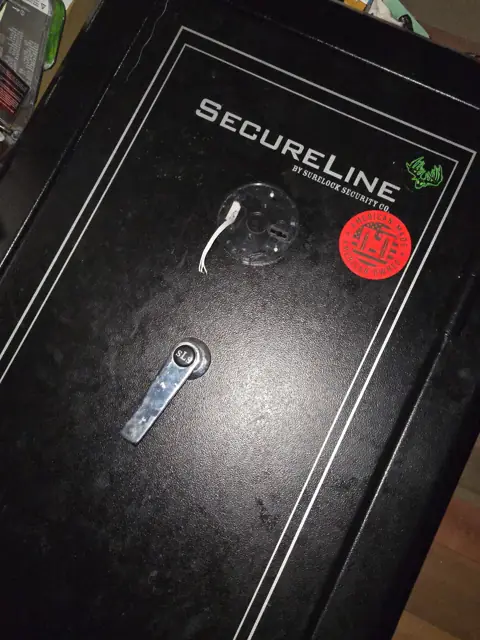
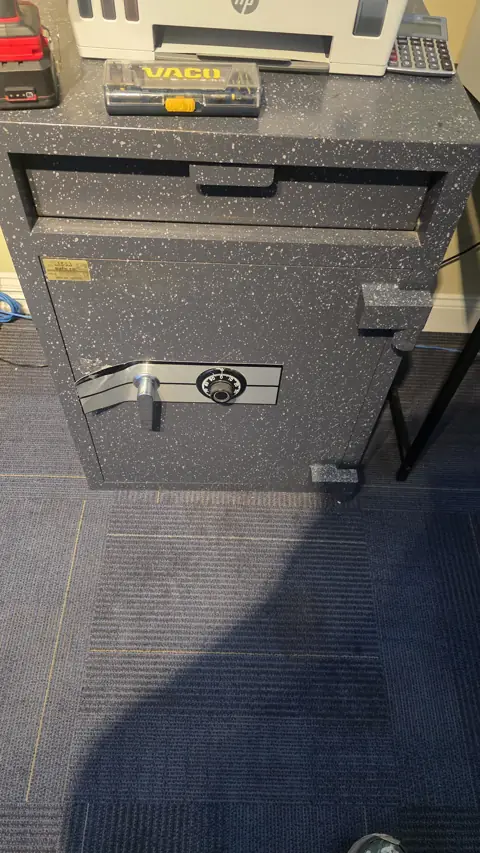
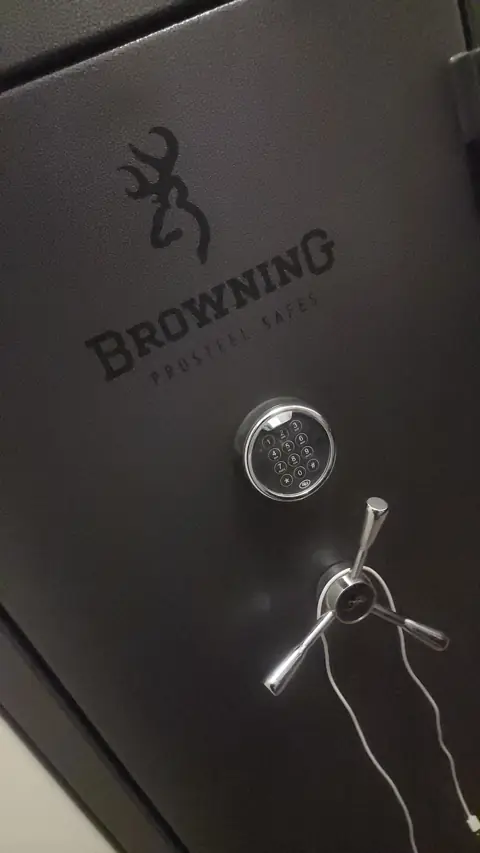
A few real safe jobs from our recent work.
Nearby safe service areas
We also take safe jobs in Mountain Grove, MO, Mountain View, MO, Salem, MO. See the full list of safe service cities.
Houston safe FAQs
My parents' house near Houston has a safe full of papers and nobody knows the combination. Can you open it so we can sort through it?
Usually, yes. We check ID and your authority to act for the estate, then open the safe by manipulation when we can, or drill it in a spot that can be repaired if we have to, and set a new combination. Call (417) 590-3870 with the safe's brand if you can read it and a photo of the front. You get a quote before we travel, and we book the visit after you say yes.
Our reunion committee keeps its cash box and records at the chairman's house, and he's stepping down. Can you change the combination on the small safe we use?
Yes. We can change the combination on most small safes and lock boxes, rekey a key-locked box, and open one if the old code was lost. Call (417) 590-3870 with the make of the safe or a photo of the lock. You get a quote before we travel, and we book the visit after you say yes.
Do you set up master key systems for businesses in Houston?
Yes. Master key systems, also called master rekeying, are the one service besides safe work that we take to Houston. Call (417) 590-3870 with the type of building, roughly how many doors, and who needs access to what. We'll quote it and schedule a time with you.
Do you do other locksmith work in Houston?
No. In Houston we only do safe work and master key systems. Our car and home lockouts, car keys and other everyday services are limited to Springfield, MO, nearby towns, and Branson.
How much does safe work cost in Houston?
It depends on the safe, the lock and the job. Call (417) 590-3870 with the details and we'll quote it before we schedule.