
Safe calls in the Fort Scott area
The soldiers who moved here from Fort Wayne in Indian Territory arrived on May 30, 1842, and named their new post for Gen. Winfield Scott. It had no stockade. The buildings went up around a wide parade ground, and the quartermaster, Capt. Thomas Swords, struggled for years with too little timber, two bricklayers and three carpenters. By the time it was close to finished it was out of date, and in 1853 the army left for Fort Riley. In 1855 the government auctioned the buildings to settlers, and two of them became hotels on opposite sides of the slavery fight: Free-State men gathered at the Fort Scott Hotel, pro-slavery men at the Western Hotel. Bourbon County was organized that same year and named for Bourbon County, Kentucky, where many settlers came from. The town was laid out in 1857 and chartered in 1860, and Kansas became a free state on January 29, 1861. During the Civil War the army came back and made Fort Scott a district headquarters, supply depot, general hospital and training center, renting blocks of the town from their owners, and it was one of the few places that recruited and trained Black soldiers for the Union. Sterling Price's Missourians won the fight at Dry Wood Creek, just across the state line, in August 1861 but never took the fort. On November 15, 1862, the Presbyterian graveyard and the land beside it became Fort Scott National Cemetery, one of the first national cemeteries and listed as National Cemetery No. 1, with a memorial to men of the 1st Kansas Colored Volunteers. After the war Fort Scott was one of the biggest towns in eastern Kansas, and three times between 1870 and 1900 it competed with Kansas City to be the biggest railroad center west of the Mississippi. Fort Scott Community College, founded in 1919, is the oldest community college in Kansas. Gordon Parks was born here on November 30, 1912, the youngest of fifteen children; he came back to photograph his segregated schoolmates for Life in 1950 and to film The Learning Tree in 1969, and the Gordon Parks Museum at the college keeps many of his photographs and belongings. The Lowell Milken Center for Unsung Heroes grew out of a 1999 history project by three Uniontown students about Irena Sendler, who hid the names of the Jewish children she rescued so they could be found again. The fort itself became a National Historic Site in 1978, with twenty historic buildings and a patch of restored tallgrass prairie, and every April its Civil War Encampment fills the parade ground with drills and black powder demonstrations. A fire on March 11, 2005, destroyed several Victorian-era buildings downtown.
Muzzleloaders, black powder guns and living-history gear
Reenactors, muzzleloader hunters and collectors of Civil War arms need a few habits that modern gun owners don't. Never put a muzzleloader in the safe loaded: take off the cap or prime, and pull or fire the charge first, because a forgotten load can sit in a barrel for years. Black powder fouling attracts moisture and rusts steel fast, so clean the bore and lock the same day, with water and soap or a cleaner made for black powder, dry it well and oil it lightly before it goes in. Black powder and its substitutes are a different hazard from smokeless powder, but they still don't belong in the gun safe; keep them in the original containers, in a cool, dry place, the way the maker and your local fire rules say, with caps stored apart. Leather cartridge boxes, slings and holsters hold moisture and tanning chemicals that can pit steel, so keep leather gear out of contact with the guns. Original antiques need gentler cleaning than reproductions, so ask a collector or conservator before you scrub an old finish. Wool uniforms and canvas tents belong in breathable storage, not a sealed safe. See safe locksmith service.
Holding valuables for someone else
Sooner or later many safe owners end up keeping things that aren't theirs: a relative's jewelry during a divorce, a neighbor's papers while they're in the hospital, an heir's share until an estate is settled, or a collector's items on loan to a small museum. It goes smoothly when it's written down. Put each person's items in their own sealed, labeled envelope or bag, list what's inside, and have both of you sign and date the list, with a copy for each. Agree in writing on who may pick the items up and what happens if the owner dies or you move. Don't mix someone else's cash with yours. Firearms are different: handing a gun to another person can count as a transfer under federal and state law, so check the rules before you agree to hold one. And if anything goes missing, the signed list is what protects you.
Safe services in Fort Scott
- Safe lockouts and openings (forgotten combinations, dead keypads, failed electronic locks, lost keys)
- Combination changes and lock replacement (dial, electronic and key locks)
- Estate and inherited safes, with proper paperwork
- Safe installation: positioning and anchoring where the safe and floor allow it
Safes and master key systems only outside the Springfield area. Car, home and business lockouts, car keys, single-lock rekeys and lock installation are offered only in Springfield, nearby towns, and Branson.
Master key systems in Fort Scott
Fort Scott's college, hospital and clinics, plants, schools, county offices and downtown shops hand out keys to many people. A master key system lets each person carry one key for their own doors while managers keep one that opens more, and a lost key means rekeying only what it opened.
Besides safes, master key systems are the one service we take to Fort Scott. A master key system, also called master rekeying, means we plan who should open which doors, then rekey your locks so each person's key opens only what they need and a master key opens everything. When someone leaves or a key goes missing, the locks that key opened can be rekeyed without changing everyone else's keys. See master key systems and master rekeying for how it works.
Scheduling a safe job in Fort Scott
When you call, tell us the safe brand, the lock type (dial, keypad or key), roughly how big it is, what happened, and where it is. We'll quote the job and set a time with you. Because regional safe jobs are planned around our other work, please call ahead rather than expecting same-day service.
We open safes only for owners or people with legal authority. Have your ID and proof of ownership, or estate paperwork, ready.
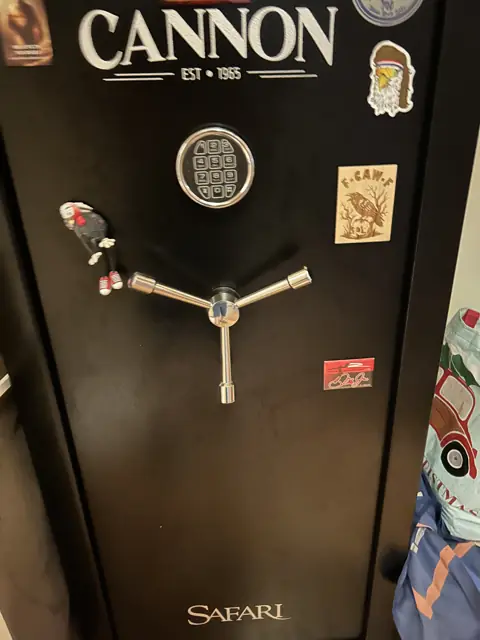
For more on the work itself, including lockouts, combination changes and installation, see our safe locksmith service page. To see what a safe opening looks like, watch us open a locked Cannon gun safe.
Safes we've worked on
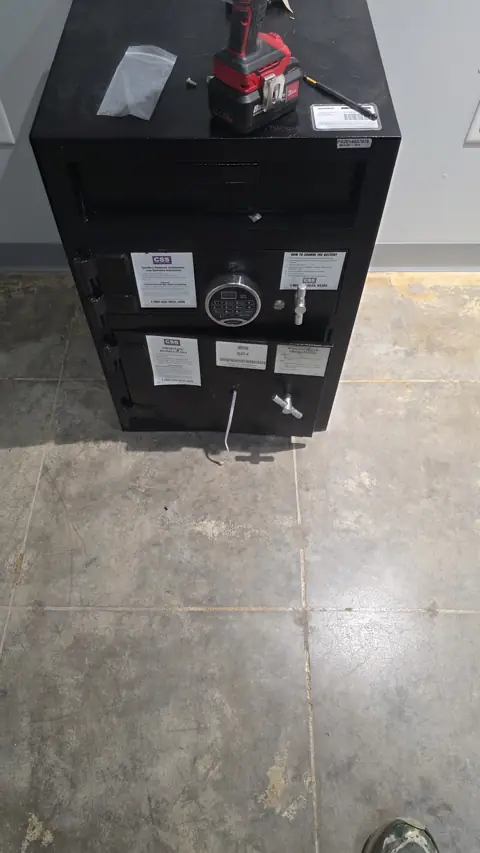
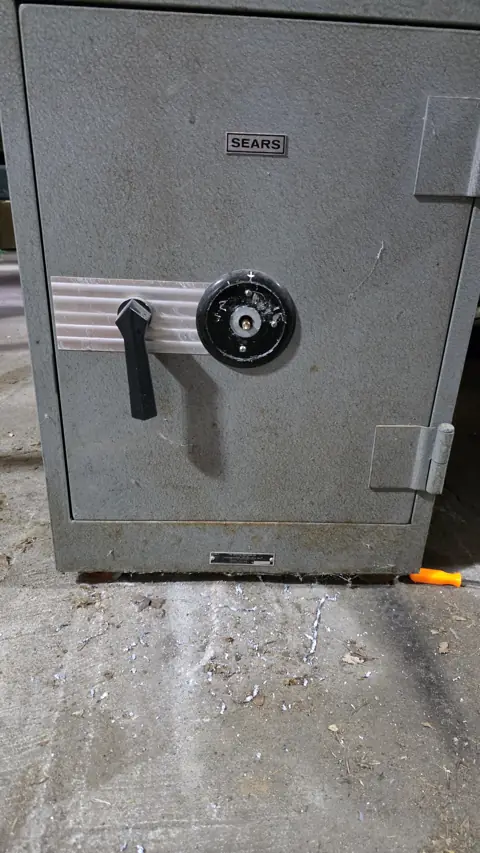
A few real safe jobs from our recent work.
Nearby safe service areas
We also take safe jobs in Mound City, KS, Nevada, MO, Pittsburg, KS. See the full list of safe service cities.
Fort Scott safe FAQs
I inherited my grandfather's muzzleloaders and an old gun safe near Fort Scott, but nobody knows the combination. Can you open it, and is it safe if a gun inside is loaded?
Usually, yes, we can open it without harming what's inside. Tell us when you call if you think a muzzleloader may still be loaded, and once it's open, have someone who knows black powder guns check and unload them before anything else. Call (417) 590-3870 with the safe's brand and a photo of the dial or keypad, and have the executor or another family member with authority there. We quote first and schedule once you approve.
I'm keeping my sister's jewelry in my fire safe in Bourbon County while her estate is settled, and the keypad quit. What should I do?
Try fresh batteries of the type the manual calls for, since a weak battery is the most common reason a keypad goes dead, and don't pry the door. If it still won't open, call (417) 590-3870 with the brand, model and a photo of the keypad. We can usually open it without damage and replace the keypad if needed. We quote first and schedule once you approve.
Do you set up master key systems for businesses in Fort Scott?
Yes. Master key systems, also called master rekeying, are the one service besides safe work that we take to Fort Scott. Call (417) 590-3870 with the type of building, roughly how many doors, and who needs access to what. We'll quote it and schedule a time with you.
Do you do other locksmith work in Fort Scott?
No. In Fort Scott we only do safe work and master key systems. Our car and home lockouts, car keys and other everyday services are limited to Springfield, MO, nearby towns, and Branson.
How much does safe work cost in Fort Scott?
It depends on the safe, the lock and the job. Call (417) 590-3870 with the details and we'll quote it before we schedule.