
Safe calls in the Lamar area
Lamar was laid out in 1856 and named for Mirabeau B. Lamar, the second president of the Republic of Texas. It was chosen as the seat of Barton County from the start, with its downtown set out as a 400-foot square and the first courthouse placed in the middle. The Civil War nearly ended it. Records of the first courthouse were lost in a fire during a skirmish, and a brick courthouse built by 1860 lasted only two years before William Quantrill's raiders attacked and damaged it beyond repair. A temporary building went up in August 1866, and by 1869 only about 1,500 people lived in town, per a marker in Wyatt Earp Park. That year the Earp family arrived. Wyatt Earp's father, Nicholas, was the town constable, and on November 17, 1869 he resigned and became justice of the peace, and 21-year-old Wyatt was appointed constable in his place, his first known law job. He swore the oath and filed a bond later in November. Lamar was incorporated on March 3, 1870, and Wyatt's work, mostly serving warrants and enforcing ordinances, included a rule against free-roaming hogs inside the city limits. He married Urilla Sutherland, whose family ran the Exchange Hotel, in January 1870, and she died soon afterward. In March 1871 the county sued him over license fees meant for schools, and he left Lamar for good. Voters finally approved money for a new permanent courthouse in 1887, and it was built in 1888 of St. Louis red brick trimmed with Barton County stone, the same building that stands on the square today though its clock tower is gone. Lamar's most famous native is Harry S. Truman, born here in 1884; in August 1944 the courthouse was the setting for his vice-presidential nomination acceptance speech. The city says his birthplace draws thousands of visitors each year, and that Lamar has also produced three naval admirals. Lamar today runs on farms, schools, churches, county offices, factories and square-side shops, and the locks and safes that protect them run from home fire and gun safes to office and business models.
Badges, handcuffs and lawman memorabilia: lost cuff keys and what to display versus lock up
A town with a lawman in its history attracts collectors, and plenty of homes have a shadow box of badges, old handcuffs, wanted posters or a retired deputy's gear. Old handcuffs and leg irons often come with a lost key, and many use simple keys that a locksmith can often replace or cut by code or by hand. If you're unsure, bring the piece and we can look at it. Badges, medals and paper keepsakes last longest in a dry, cool safe rather than a wall display in a sunny room. Record where each item came from, who wore or used it and any dates, and photograph it for insurance. Keep real service weapons and ammunition separate from the memorabilia, locked in a gun safe, and keep the key or combination away from children. Wanted posters, citations and old commission papers are fragile, so slip them into acid-free sleeves before they go in, and never fold them along the old creases again. Local collectors often trade pieces at shows, so keep a bill of sale for each purchase. If the collection belongs to a retired officer's estate, ask the family or department what must be returned before anyone sells or gives away anything.
Antique mall booths: locking cases when many dealers share one space
A booth in an antique mall puts small, valuable things in a room that dozens of people walk through all day. Jewelry, coins, pocket knives, watches and small silver belong in a locked glass case, and the case keys are the problem, because a mall might have one master set at the counter while each dealer holds a copy. Keep a list of who has keys to which case, and don't hand a key to a customer without a staff member present. If a case lock is stiff or a key snaps, don't force it; glass cases are cheaper to repair than to replace. Take the best pieces home at night or put them in a locked cabinet, count what's in the case at opening and closing, and keep a photo log of what you put out. Ask the mall what its insurance covers inside your booth, because many policies exclude items taken from an unlocked case, and tag every piece with a code that matches your log so a missing item is easy to spot. When a dealer leaves, change the case lock so a key left behind doesn't open the next dealer's stock.
Safe services in Lamar
- Safe lockouts and openings (forgotten combinations, dead keypads, failed electronic locks, lost keys)
- Combination changes and lock replacement (dial, electronic and key locks)
- Estate and inherited safes, with proper paperwork
- Safe installation: positioning and anchoring where the safe and floor allow it
Safes and master key systems only outside the Springfield area. Car, home and business lockouts, car keys, single-lock rekeys and lock installation are offered only in Springfield, nearby towns, and Branson.
Master key systems in Lamar
Lamar's county offices, schools, churches, clinics, manufacturers and the shops around the square hand out keys to many people. A master key system lets each person carry one key for their own doors while managers keep a master, and a lost key means rekeying only what it opened.
Besides safes, master key systems are the one service we take to Lamar. A master key system, also called master rekeying, means we plan who should open which doors, then rekey your locks so each person's key opens only what they need and a master key opens everything. When someone leaves or a key goes missing, the locks that key opened can be rekeyed without changing everyone else's keys. See master key systems and master rekeying for how it works.
Scheduling a safe job in Lamar
When you call, tell us the safe brand, the lock type (dial, keypad or key), roughly how big it is, what happened, and where it is. We'll quote the job and set a time with you. Because regional safe jobs are planned around our other work, please call ahead rather than expecting same-day service.
We open safes only for owners or people with legal authority. Have your ID and proof of ownership, or estate paperwork, ready.
For more on the work itself, including lockouts, combination changes and installation, see our safe locksmith service page. To see what a safe opening looks like, watch us open a locked Cannon gun safe.
Safes we've worked on
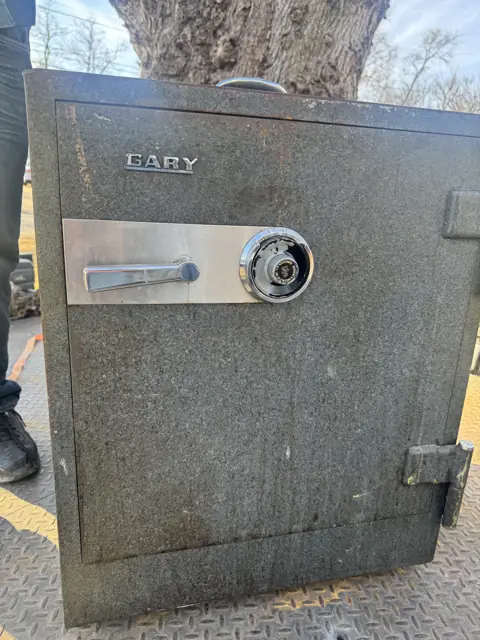
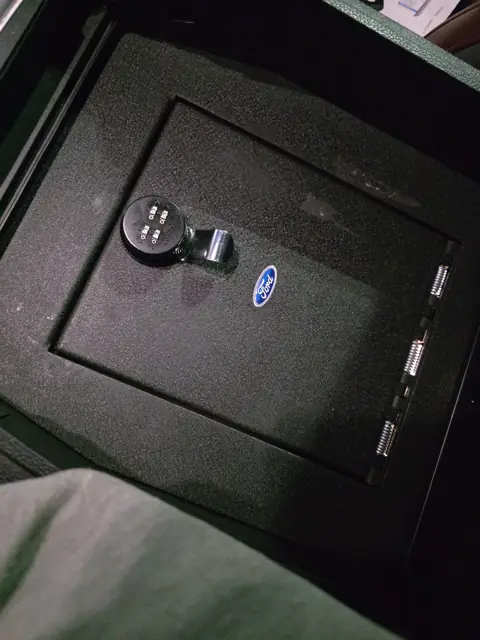
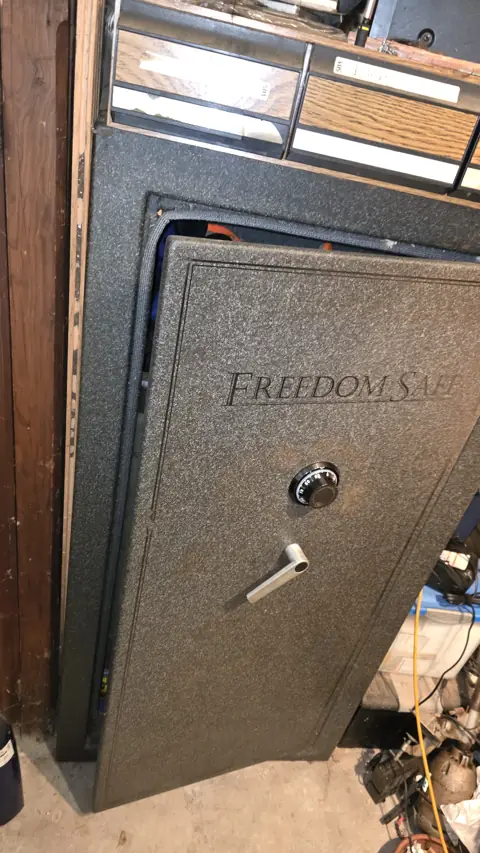
A few real safe jobs from our recent work.
Nearby safe service areas
We also take safe jobs in Carthage, MO, Nevada, MO, Webb City, MO. See the full list of safe service cities.
Lamar safe FAQs
I have a set of old handcuffs from my grandfather in Barton County and the key is gone. Can you help?
Often, yes. Many older cuffs use simple keys we can replace or cut by code or by hand. Call (417) 590-3870 with a photo of the cuff and the keyhole, and any maker's marks you can find. You get a quote before we travel, and we book the visit after you say yes.
I rent a booth at an antique mall near Lamar and a case lock quit working. Can you open or replace it?
Usually, yes. We can open a stuck case lock, cut a replacement key, or rekey the case so the lost key stops working. Call (417) 590-3870 with a photo of the lock and the type of case. You get a quote before we travel, and we book the visit after you say yes.
Do you set up master key systems for businesses in Lamar?
Yes. Master key systems, also called master rekeying, are the one service besides safe work that we take to Lamar. Call (417) 590-3870 with the type of building, roughly how many doors, and who needs access to what. We'll quote it and schedule a time with you.
Do you do other locksmith work in Lamar?
No. In Lamar we only do safe work and master key systems. Our car and home lockouts, car keys and other everyday services are limited to Springfield, MO, nearby towns, and Branson.
How much does safe work cost in Lamar?
It depends on the safe, the lock and the job. Call (417) 590-3870 with the details and we'll quote it before we schedule.