
Safe calls in the Ottawa area
Ottawa is named for the Ottawa people, two bands of whom were moved here from Ohio under an 1831 treaty and arrived on their reservation along the Marais des Cygnes ("river of swans") in the 1830s. Baptist missionaries Jotham and Eleanor Meeker worked among them as preachers, teachers, nurses and business agents, and when the great flood of 1844 swept the valley, the Ottawa moved their log houses to higher ground log by log. John Tecumseh "Tauy" Jones, a Baptist minister of Chippewa and English descent who served as the tribe's interpreter, built a farmhouse outside the future town that pro-slavery raiders burned on August 29, 1856; the stone house he built to replace it in the 1860s still stands and is on the National Register. In 1860 Kansas Baptists chartered Roger Williams University, and Jones helped arrange for the Ottawa to set aside twenty thousand acres to endow a school their children could attend, under an 1862 treaty. The school became Ottawa University, but the tribe sold its remaining Kansas land in 1867 and moved to Indian Territory, and no Ottawa student ever attended at the college level. In the spring of 1864 a town company led by Indian agent C. C. Hutchinson and Rev. I. S. Kalloch, with Ottawa chief James Wind and Jones among its members, laid out the town. J. C. Richmond raised the first house on the last day of March 1864, and on August 1, 1864, voters made Ottawa the seat of Franklin County. The old territorial capitol building at Minneola was taken apart and set up again in town, where its upstairs hall served as courtroom, meeting room and church. Kalloch's Western Home Journal came out by June 1865, Ottawa was incorporated as a town in 1866, and in October 1867 voters made it a city, electing Asa S. Lathrop its first mayor. A toll suspension bridge crossed the river in the winter of 1866 and 1867 until the city bought it and made it free, the railroad brought machine shops, and the Ottawa Herald began in 1869. From 1883 for some thirty years the Ottawa Chautauqua filled Forest Park every summer with crowds in the thousands for lectures, music and sermons, and it became known for its women's programs in the 1890s. The river kept coming back: floods in 1904 and 1928, and the Great Flood of 1951, which covered about a third of the town, before the Corps of Engineers built levees and pumping stations in the 1960s. In World War II a branch prisoner-of-war camp sent workers out to area farms. The 1888 Santa Fe depot is now the Old Depot Museum, the Carnegie library is the Carnegie Cultural Center, the Plaza Grill and Cinema is believed to be one of the oldest operating movie theaters in the country, and large distribution centers, Ottawa University and a branch of Neosho County Community College keep the town busy.
Funeral homes: personal effects, pre-need files and family payments
A funeral home holds things families can't replace: wedding rings, watches and other jewelry removed before a viewing or cremation, wallets and phones from the hospital bag, and sometimes cremated remains waiting to be picked up. Each item should go into its own sealed, labeled envelope or bag with a numbered tag, logged on an inventory the family signs when it comes back to them, and kept in a safe or locked cabinet until then. Keep the safe code and the cabinet keys with as few staff as possible, and give each person their own code where the lock allows it. Families often pay by check or cash in the office, so drop payments into a drop safe until the deposit goes out. Pre-need contracts, insurance assignments, death certificates and authorization forms belong in fire-resistant files, and your state's funeral board and trust rules decide what must be kept and for how long. Change codes and collect keys when an employee or a seasonal helper leaves, and walk new staff through the personal-effects log on their first day. See safe locksmith service.
Quilts, christening gowns and textile heirlooms
Family quilts, a grandmother's christening gown, a wedding dress, military uniforms and hand-stitched samplers are often the most cherished things in a house, and many people want to lock them up with the jewelry. A tight gun safe or fire safe is usually a poor home for them. Fire safes can release moisture when they heat up, gun safes can run damp or too dry depending on the heater rod and desiccant, and folded fabric left for years in the same creases can weaken and split. Store textiles in a closet inside the main part of the house, where it stays cool, dark and dry, wrapped in clean cotton sheets or acid-free tissue and boxes, not plastic bags or cedar chests that touch the fabric directly. Refold or roll quilts every few months so the creases move. Keep the paperwork in the safe instead: the story of who made the quilt, appraisals, photos and any show ribbons or documentation, because a written history adds a lot to what an heirloom means to the next generation and can help with insurance. If something small, such as a christening bonnet or a medal ribbon, must go in the safe, put it in an acid-free box on an upper shelf, away from the heater rod and the desiccant. See safe locksmith service.
Safe services in Ottawa
- Safe lockouts and openings (forgotten combinations, dead keypads, failed electronic locks, lost keys)
- Combination changes and lock replacement (dial, electronic and key locks)
- Estate and inherited safes, with proper paperwork
- Safe installation: positioning and anchoring where the safe and floor allow it
Safes and master key systems only outside the Springfield area. Car, home and business lockouts, car keys, single-lock rekeys and lock installation are offered only in Springfield, nearby towns, and Branson.
Master key systems in Ottawa
Ottawa's university, schools, the hospital, distribution centers, county offices, funeral homes and downtown businesses have keys in many hands. A master key system lets each person carry one key for their own doors while managers keep a master, and a lost key means rekeying only what it opened.
Besides safes, master key systems are the one service we take to Ottawa. A master key system, also called master rekeying, means we plan who should open which doors, then rekey your locks so each person's key opens only what they need and a master key opens everything. When someone leaves or a key goes missing, the locks that key opened can be rekeyed without changing everyone else's keys. See master key systems and master rekeying for how it works.
Scheduling a safe job in Ottawa
When you call, tell us the safe brand, the lock type (dial, keypad or key), roughly how big it is, what happened, and where it is. We'll quote the job and set a time with you. Because regional safe jobs are planned around our other work, please call ahead rather than expecting same-day service.
We open safes only for owners or people with legal authority. Have your ID and proof of ownership, or estate paperwork, ready.
For more on the work itself, including lockouts, combination changes and installation, see our safe locksmith service page. To see what a safe opening looks like, watch us open a locked Cannon gun safe.
Safes we've worked on
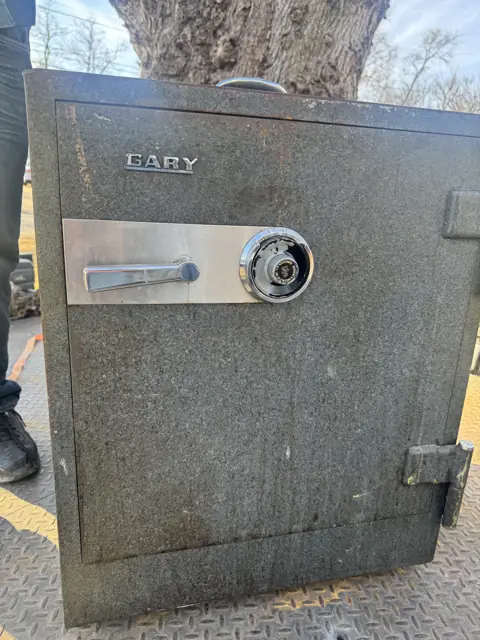
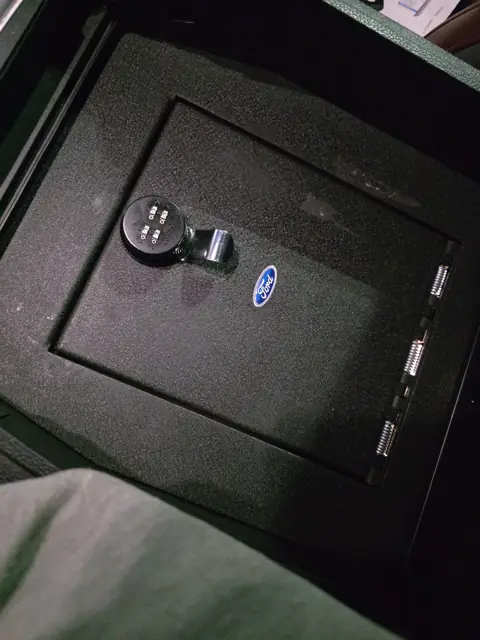
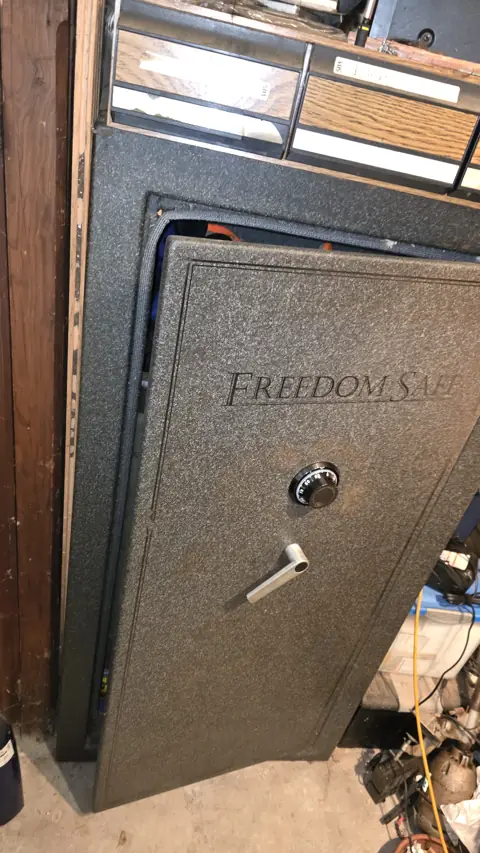
A few real safe jobs from our recent work.
Nearby safe service areas
We also take safe jobs in Garnett, KS, Lawrence, KS, Paola, KS. See the full list of safe service cities.
Ottawa safe FAQs
I run a funeral home near Ottawa, and our personal-effects safe won't open after the battery died over a holiday weekend. Families are waiting for their loved ones' jewelry. Can you come?
Usually, yes. First try fresh batteries of the type the manual calls for, and look for an outside battery contact or backup key, since many keypads have one. If it still won't open, call (417) 590-3870 with the brand, the model and a photo of the keypad, and have the owner or manager there to authorize it. We can open most safes without damage and replace a failed keypad. We quote first and schedule once you approve.
My mother kept her christening gown and my grandmother's quilt in an old safe in Franklin County, and we've lost the combination. Can you open it without damaging them?
Usually, yes. Many older safes can be opened by manipulating the lock rather than drilling the box, and we'll tell you before we do anything that could harm what's inside. Call (417) 590-3870 with photos of the door, the dial and any maker's name, and have the estate paperwork or proof of ownership handy. Once it's open, it's a good time to move the fabric to a cool, dry closet and keep the family history papers in the safe. We quote first and schedule once you approve.
Do you set up master key systems for businesses in Ottawa?
Yes. Master key systems, also called master rekeying, are the one service besides safe work that we take to Ottawa. Call (417) 590-3870 with the type of building, roughly how many doors, and who needs access to what. We'll quote it and schedule a time with you.
Do you do other locksmith work in Ottawa?
No. In Ottawa we only do safe work and master key systems. Our car and home lockouts, car keys and other everyday services are limited to Springfield, MO, nearby towns, and Branson.
How much does safe work cost in Ottawa?
It depends on the safe, the lock and the job. Call (417) 590-3870 with the details and we'll quote it before we schedule.