
Safe calls in the Lexington area
Lexington sits on the bluffs above the Missouri River, and the river made it. Gilead Rupe started a ferry here in 1819, the town was platted in 1822 and named for the Revolutionary War battle, and in 1823 it became the seat of Lafayette County. John Aull opened a store in 1822 and, with his brothers, ran a chain of frontier stores in several towns. In the 1830s and 1840s Lexington was the largest town west of St. Louis, an outfitting center where traders and emigrants bought supplies before heading west, and in the 1840s the freighting firm of Russell, Majors and Waddell, which later started the Pony Express, set up its headquarters here. Coal from mines in the bluffs, among the first in the state, fueled the steamboats at the wharf. In 1852 the boilers of the steamboat Saluda exploded at Lexington, killing more than 150 passengers, and many of the orphaned children were raised by local families. The town's public buildings went up in the same prosperous years: the Greek Revival Lafayette County Courthouse of 1847, described as the oldest courthouse in continuous use west of the Mississippi, the Masonic College of the same year, and the Gothic Revival Christ Episcopal Church of 1848 with its walnut interior. In September 1861 Major General Sterling Price's Missouri State Guard besieged the Union post at the Masonic College held by Colonel James A. Mulligan, and on the last day Price's men rolled soaked hemp bales up the bluff as moving breastworks until the garrison surrendered on September 20. The Battle of the Hemp Bales site is now a state historic site with the Anderson House, and a cannonball is still lodged in an upper column of the courthouse. A second, smaller battle followed in October 1864. In 1866 the Alexander Mitchell bank in town was hit by one of the first daylight bank robberies in the country. After the war, rail traffic took over from the river, and Lexington turned to schools, calling itself the "Athens of the West" for its colleges for women and for Wentworth Military Academy, which opened in 1880 and closed in 2017. More than 150 houses and public buildings in town were built before the Civil War, and the town holds tours of its historic homes each year. A garment company that began here in 1939 grew into a national apparel maker, and the town is still the county's center for courts, records and services.
A school that closed: transcripts, class rings and the alumni archive
When a private school or academy closes, its graduates still need transcripts, diplomas and proof of attendance, and its keepsakes end up scattered among alumni and local families. If you have your own records, keep the original diploma, transcript and any military or ROTC papers in a fire-resistant safe with copies elsewhere, and find out which archive or successor school now holds the official files, because that's where a future employer will ask. Rings, sabers, uniforms, yearbooks and photographs are the kind of thing families want to keep, and they need dry, padded storage, not a damp basement or a box in the attic. Alumni groups that collect a school's papers and memorabilia should keep an inventory, a log of who has the keys and a safe or locking cabinet for the most valuable pieces. If one of those cabinets or an old school safe has a lock nobody can open, we can help.
Cannonballs, shells and battlefield relics: why some of them don't belong in your safe
Towns that saw Civil War fighting still turn up iron shot, bullets, buttons and fragments of shells in gardens, fields and old walls. Solid shot and small relics can be cleaned, labeled with where and when they were found, and kept in a dry cabinet or safe with their story written down, and a family relic with a record of where it came from is far more interesting to the next generation. Hollow artillery shells are different. Some still hold powder after more than a century and can be dangerous to handle, clean or lock in a closed box. If you find or inherit one and don't know whether it has been made safe, leave it alone and call local law enforcement before you move it. Never dig for relics on public land or a battlefield site. We help with the safe, not the shell: once a relic has been checked, we can suggest how to store it.
Safes in houses on the historic register: installing without harming plaster, floors or woodwork
A house built before the Civil War has thick plaster walls, old wood floors and trim that can't be replaced at a hardware store, and some sit in historic districts or under easements with rules about changes. A safe can still go in, but the plan matters. A freestanding safe bolted to a new plywood base or into the floor framing from below can often be anchored without cutting visible woodwork, and a closet or basement with a modern floor is usually the easiest spot. Measure doorways and stairs before choosing a size, because old houses rarely have wide openings, and check with the district or easement holder before drilling anything visible. If an old wall safe was built into the house by a past owner, don't pry at it. We can open it and tell you whether it's worth keeping.
Safe services in Lexington
- Safe lockouts and openings (forgotten combinations, dead keypads, failed electronic locks, lost keys)
- Combination changes and lock replacement (dial, electronic and key locks)
- Estate and inherited safes, with proper paperwork
- Safe installation: positioning and anchoring where the safe and floor allow it
Safes and master key systems only outside the Springfield area. Car, home and business lockouts, car keys, single-lock rekeys and lock installation are offered only in Springfield, nearby towns, and Branson.
Master key systems in Lexington
Lexington's courthouse, schools, churches, historic sites, clinics and downtown businesses hand out keys to many people. A master key system lets each person carry one key for their own doors while managers keep a master, and a lost key means rekeying only what it opened.
Besides safes, master key systems are the one service we take to Lexington. A master key system, also called master rekeying, means we plan who should open which doors, then rekey your locks so each person's key opens only what they need and a master key opens everything. When someone leaves or a key goes missing, the locks that key opened can be rekeyed without changing everyone else's keys. See master key systems and master rekeying for how it works.
Scheduling a safe job in Lexington
When you call, tell us the safe brand, the lock type (dial, keypad or key), roughly how big it is, what happened, and where it is. We'll quote the job and set a time with you. Because regional safe jobs are planned around our other work, please call ahead rather than expecting same-day service.
We open safes only for owners or people with legal authority. Have your ID and proof of ownership, or estate paperwork, ready.
For more on the work itself, including lockouts, combination changes and installation, see our safe locksmith service page. To see what a safe opening looks like, watch us open a locked Cannon gun safe.
Safes we've worked on
A few real safe jobs from our recent work.
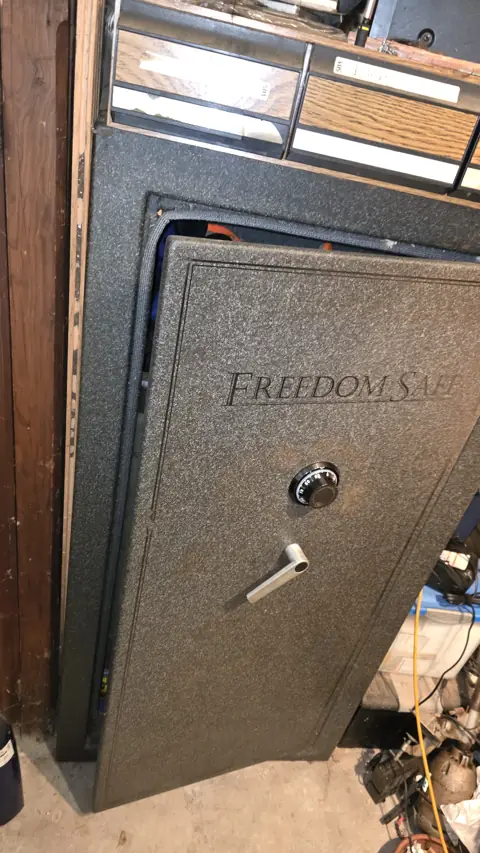
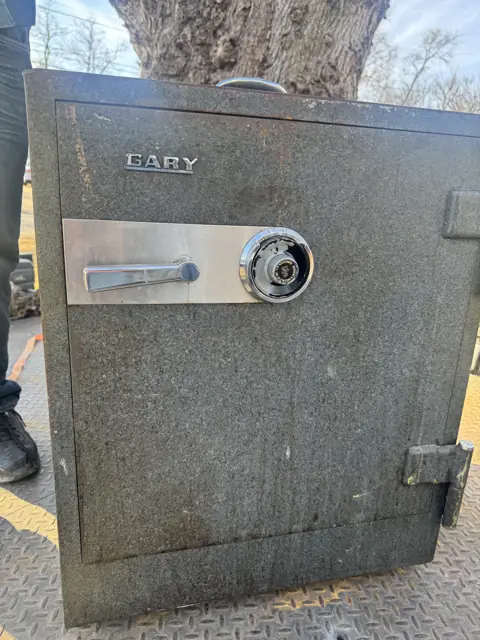
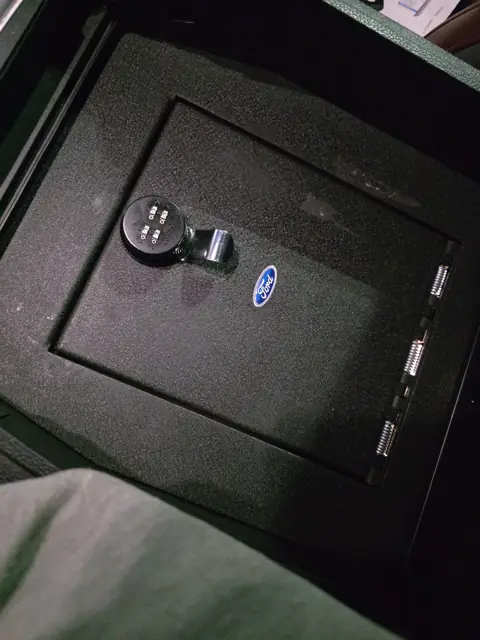
Nearby safe service areas
We also take safe jobs in Richmond, MO, Concordia, MO, Carrollton, MO. See the full list of safe service cities.
Lexington safe FAQs
I found what looks like an old artillery shell in my yard near Lexington. Can I put it in my safe?
No. Don't move it. Some Civil War shells still hold powder, so call local law enforcement before you touch it. Once a relic has been checked and is confirmed safe, we can help you choose a safe or cabinet to store and display it. For safe questions, call (417) 590-3870. You get a quote before we travel, and we book the visit after you say yes.
Our house in Lexington is on the National Register and we want a safe without damaging the floors. Is that possible?
Often, yes. We can anchor many safes to a base or through the floor from below so that nothing visible is cut, and we'll help you pick a size that fits your doors and stairs. Call (417) 590-3870 with photos of the room and the path to it. You get a quote before we travel, and we book the visit after you say yes.
Do you set up master key systems for businesses in Lexington?
Yes. Master key systems, also called master rekeying, are the one service besides safe work that we take to Lexington. Call (417) 590-3870 with the type of building, roughly how many doors, and who needs access to what. We'll quote it and schedule a time with you.
Do you do other locksmith work in Lexington?
No. In Lexington we only do safe work and master key systems. Our car and home lockouts, car keys and other everyday services are limited to Springfield, MO, nearby towns, and Branson.
How much does safe work cost in Lexington?
It depends on the safe, the lock and the job. Call (417) 590-3870 with the details and we'll quote it before we schedule.