
Safe calls in the Fayette area
Fayette is the seat of Howard County, on high, rolling farm ground north of the Missouri River in the part of central Missouri long known as the Boonslick and Little Dixie; it is not Fayetteville, Arkansas. Howard County was organized in January 1816, before Missouri was a state, and named for Benjamin Howard, the first governor of the Missouri Territory. The National Register's history of the town says more than half of Missouri's first fifteen governors are said to have lived in the county at some point. Its first seat was Franklin, down on the river, but the Missouri kept eating into that town and people wanted a seat nearer the middle. In 1823 settlers Hiram Fugate, who had built a cabin here in 1812, and Hickerson Burnham each gave land, and Judge Alfred Morrison laid out a grid of lots around a courthouse square. The site was picked because it was smooth and drained well, and the town was named for the Marquis de Lafayette, whose visit to America was expected. A post office opened in 1824. The square has held three courthouses: a small brick one in 1824, a larger one in 1859 that burned on December 1, 1886, because the town had no way to fight a fire, and the present Second Empire courthouse, finished in 1887. Fayette also became a school town. Howard High School grew into both Howard Female College, later Howard-Payne, and Central College, founded in 1853 and chartered in 1855; today it is Central Methodist University, with Brannock Hall from 1856, the Morrison Observatory and the Stephens Museum. In September 1864 guerrillas led by Bill Anderson and George Todd, some wearing Union uniforms taken from dead soldiers, rode into town and charged the militia's log blockhouses at the north edge of today's campus three times, and were driven off each time; a state marker on the campus tells the story. The Courthouse Square, the residential district and several old homes are on the National Register. We open, repair and service safes for Fayette homes, farms, offices and college buildings, and across Howard County too.
Lessons from a log blockhouse: a door frame that holds when someone kicks it
The men in Fayette's blockhouses held because the walls were thick and the doors were barred, not because they had better locks. A house door works the same way. Most break-ins through a locked door don't pick or beat the lock; they kick the door until the wood frame splits around the strike plate and the deadbolt tears out with it. A good deadbolt with a full one-inch throw matters, but so does what it bolts into. Ask for a heavy strike plate fastened with three-inch screws that reach the house framing, not the short screws that only grip the trim, and longer screws in at least one hole of each hinge too. A steel or solid wood door, a reinforced jamb kit on an old soft frame and a door that fits its frame so the bolt seats all the way out all add up. Old houses in Fayette often have doors that have been planed and shimmed for a century, so check that the bolt really reaches its hole. The same logic applies inside: a safe that isn't bolted down can be carried out through any door.
A big old house with too many outside doors: keying them alike and finding the old keys still out there
Fayette's older homes often have a front door, a side porch door, a kitchen door, a cellar door and a door to an addition, each with a different lock and a different key, plus keys that went home with past owners, renters, painters and the neighbor who fed the cat. When you buy or inherit a house like that, assume you don't know who has a key. Rekeying every exterior lock to one new key fixes both problems at once: one key for the whole house, and every old key stops working. Locks that can't be rekeyed, or that are worn out, can be replaced, and old hardware you want to keep for looks can often stay with a working deadbolt added beside it. Don't forget the garage service door, a storm cellar, an outbuilding and any keypad codes. Keep a short list of who holds a key and the spare in your safe, and rekey again after a contractor job or when a tenant moves out.
Safe services in Fayette
- Safe lockouts and openings (forgotten combinations, dead keypads, failed electronic locks, lost keys)
- Combination changes and lock replacement (dial, electronic and key locks)
- Estate and inherited safes, with proper paperwork
- Safe installation: positioning and anchoring where the safe and floor allow it
Safes and master key systems only outside the Springfield area. Car, home and business lockouts, car keys, single-lock rekeys and lock installation are offered only in Springfield, nearby towns, and Branson.
Master key systems in Fayette
Fayette's courthouse, county offices, the university's halls, school buildings, churches and the shops on the square hand out keys to many people. A master key system lets each person carry one key for their own doors while managers keep a master, and a lost key means rekeying only what it opened.
Besides safes, master key systems are the one service we take to Fayette. A master key system, also called master rekeying, means we plan who should open which doors, then rekey your locks so each person's key opens only what they need and a master key opens everything. When someone leaves or a key goes missing, the locks that key opened can be rekeyed without changing everyone else's keys. See master key systems and master rekeying for how it works.
Scheduling a safe job in Fayette
When you call, tell us the safe brand, the lock type (dial, keypad or key), roughly how big it is, what happened, and where it is. We'll quote the job and set a time with you. Because regional safe jobs are planned around our other work, please call ahead rather than expecting same-day service.
We open safes only for owners or people with legal authority. Have your ID and proof of ownership, or estate paperwork, ready.
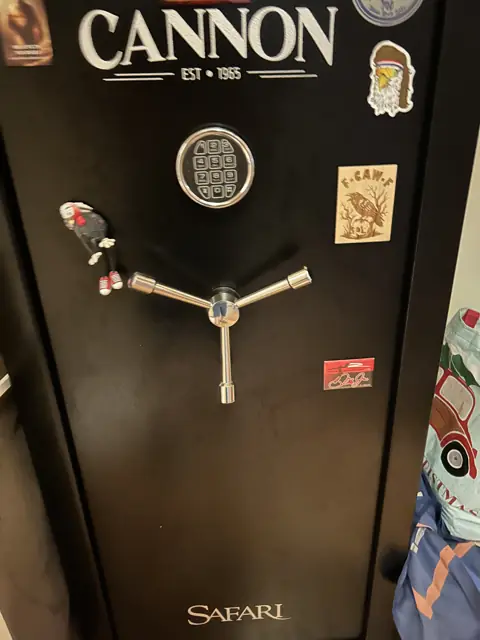
For more on the work itself, including lockouts, combination changes and installation, see our safe locksmith service page. To see what a safe opening looks like, watch us open a locked Cannon gun safe.
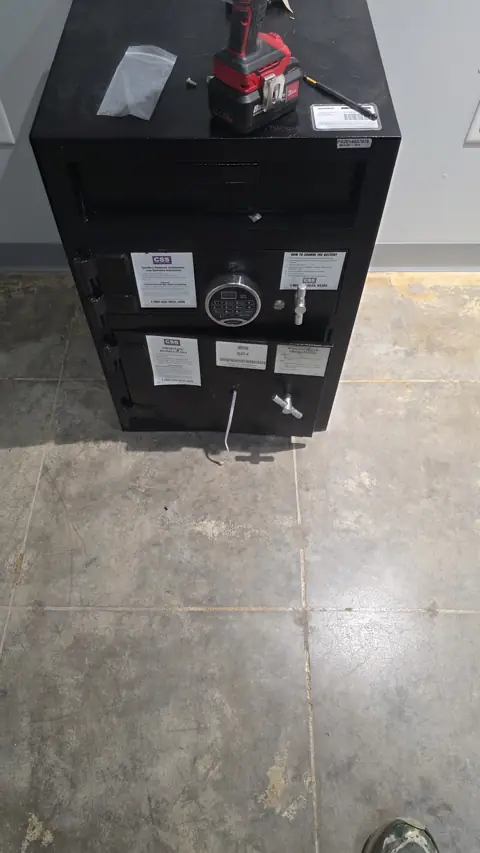
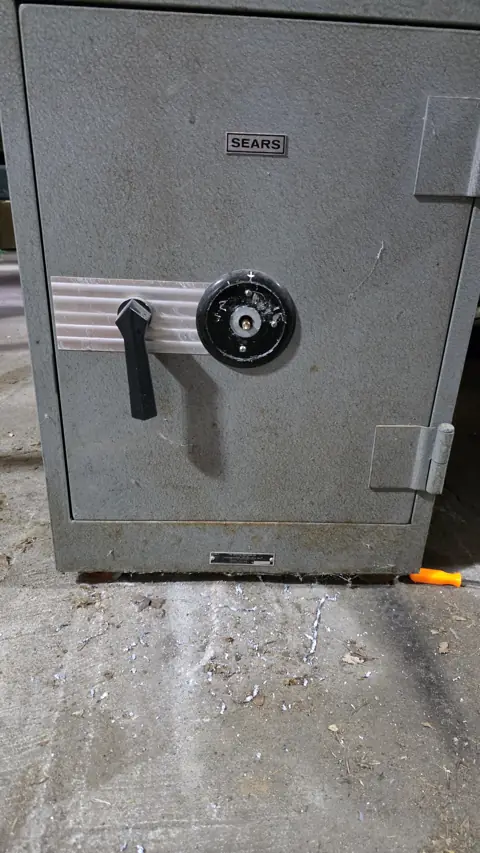
Safes we've worked on
A few real safe jobs from our recent work.
Nearby safe service areas
We also take safe jobs in Boonville, MO, Moberly, MO, Keytesville, MO. See the full list of safe service cities.
Fayette safe FAQs
Someone kicked in a back door at our house in Fayette, and the frame split. Can you fix it so it holds next time?
Yes. We can repair or reinforce the jamb, install a heavy strike plate with long screws into the framing, and put in a solid deadbolt, then rekey the other doors to match. Call (417) 590-3870. You get a quote before we travel, and we book the visit after you say yes.
We bought an old house in Fayette with five outside doors and a ring of mystery keys. Can everything go on one key?
Usually, yes. We can rekey the exterior locks so one new key opens them all and every old key stops working, and replace any lock that's too worn to rekey. Call (417) 590-3870. You get a quote before we travel, and we book the visit after you say yes.
Do you set up master key systems for businesses in Fayette?
Yes. Master key systems, also called master rekeying, are the one service besides safe work that we take to Fayette. Call (417) 590-3870 with the type of building, roughly how many doors, and who needs access to what. We'll quote it and schedule a time with you.
Do you do other locksmith work in Fayette?
No. In Fayette we only do safe work and master key systems. Our car and home lockouts, car keys and other everyday services are limited to Springfield, MO, nearby towns, and Branson.
How much does safe work cost in Fayette?
It depends on the safe, the lock and the job. Call (417) 590-3870 with the details and we'll quote it before we schedule.